
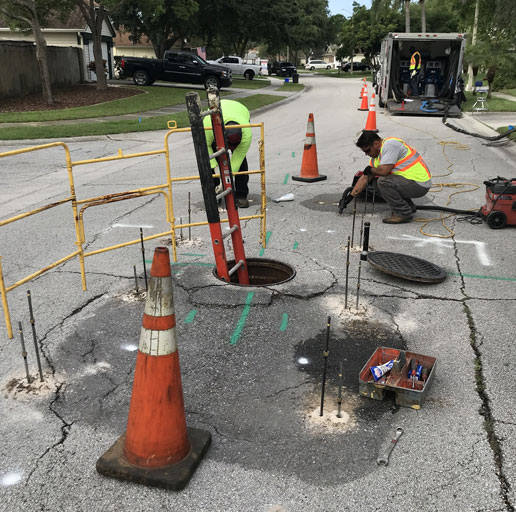
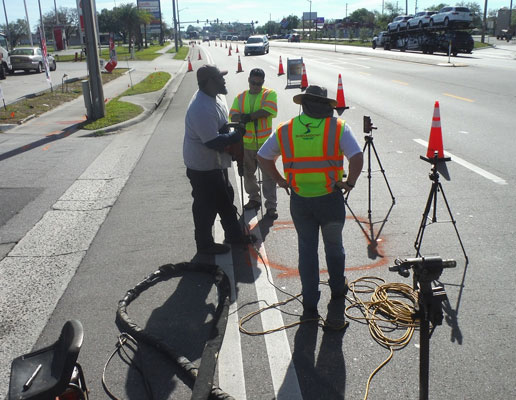
Settlement Doesn't Stop on Its Own
Eroded soil undermines foundations, destabilizes infrastructure, and creates voids that collapse without warning.
When soil washes out beneath slabs, roadways settle unevenly, sinkholes threaten properties, and seawalls lose the backfill that supports them. Delaying stabilization turns manageable settlement into catastrophic structural failures: foundation cracks widen, roadways become impassable, and voids expand until surfaces collapse.
Planned Stabilization > Emergency Excavation
Stop Settlement. Restore Capacity. Protect Assets.
Shenandoah’s soil and seawall stabilization services address settlement, voids, and erosion using polyurethane injection that fills voids, compacts loose soil, and lifts settled structures back to grade — all through small access points that eliminate excavation. Completed in hours rather than weeks, our solutions restore load-bearing capacity and prevent progressive failures.
Rehabilitation That Works with Existing Conditions
We stabilize ground beneath active roadways, lift settled bridge approaches without closing traffic lanes, and fill voids under occupied buildings. Polyurethane injection adapts to varying soil conditions, achieves precise lifting tolerances, and cures in minutes.
Integrated Solutions, Not Isolated Fixes
Shenandoah’s approach connects soil stabilization to pipe rehabilitation, hydro excavation to utility protection, and void filling to long-term infrastructure planning. Inspection identifies where settlement stems from leaking pipes. When one team coordinates assessment through verification, you address long-term root problems instead of surface-level issues.
Soil Stabilization for Failing Infrastructure
We support municipalities, transportation agencies, and property owners with soil stabilization services that prevent settlement, restore structural capacity, and eliminate the voids.
Sinkhole Remediation & Repair: Fill Voids Before Collapse
When Underground Erosion Creates Surface Threats
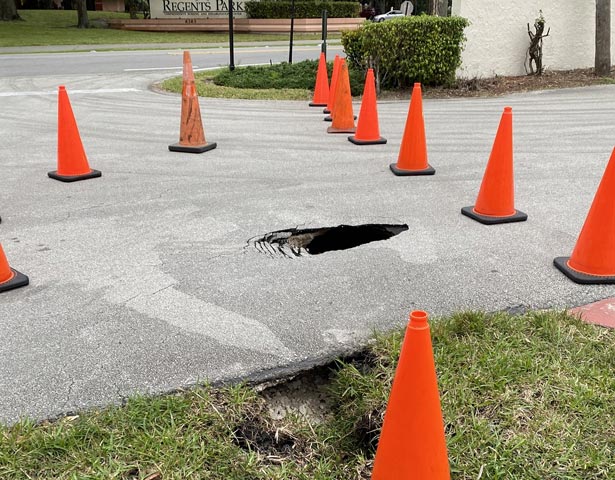
Sinkholes form when soil erodes into deteriorating pipes, creating underground voids that eventually collapse. By the time surface depressions appear, subsurface voids often extend far beyond visible damage — threatening adjacent structures, utilities, and roadways.
Fill Voids. Stabilize Soil. Prevent Expansion.
Polyurethane injection fills underground voids, compacts surrounding soil into stable support, and stops the erosion that causes progressive expansion. CCTV inspection verifies complete fill and identifies leaking pipes causing continued soil migration.
Immediate Stabilization Prevents Catastrophe
- Active Sinkholes: Fill voids and stabilize soil before collapse threatens structures or utilities
- Preventive Stabilization: Address subsurface voids detected through ground-penetrating radar before surface failure
- Post-Repair Protection: Stabilize soil after pipe rehabilitation to prevent recurring settlement
Subsurface Stabilization & Slab Lifting: Restore Grade Without Replacement
Lift Precisely with Minimal Disruption
Polyurethane injection lifts settled concrete back to grade with 1/8″ precision, filling voids beneath slabs while simultaneously compacting soil into load-bearing support. Material expands to fill irregular voids, cures in 15 minutes, and achieves 90% of full strength immediately—allowing structures to return to service within hours.
Roadway & Pavement Stabilization: Repair Roads Without Reconstruction
When Base Failure Destroys Surfaces
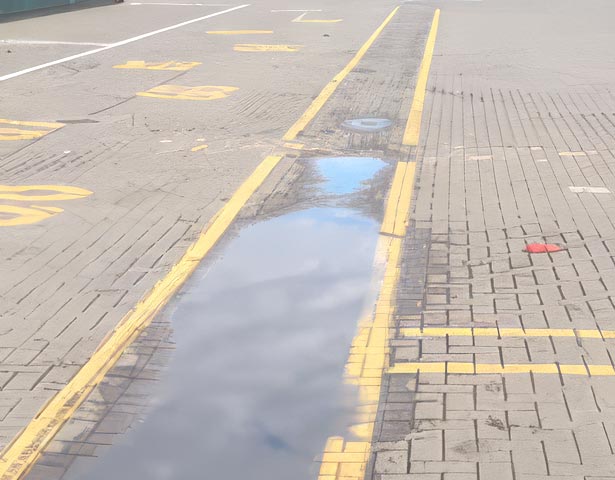
Roadway settlement creates dangerous transitions, accelerates pavement deterioration, and forces expensive overlay after overlay that fails because the base remains unstable. Void spaces beneath pavements allow flexing that cracks asphalt and breaks concrete panels. Traditional reconstruction requires lane closures lasting weeks.
Stabilize Base. Lift Surface. Reopen Fast.
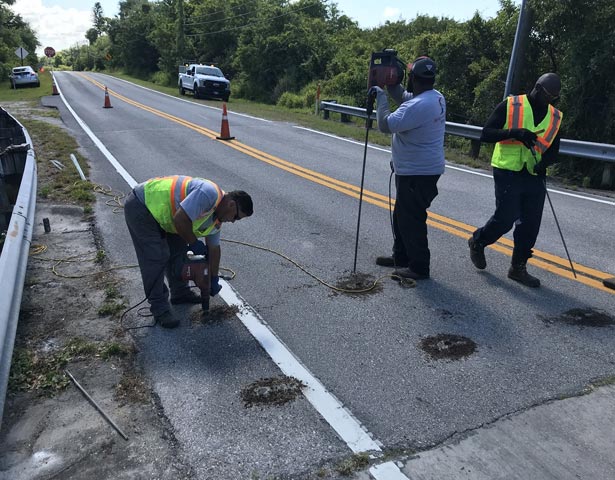
Polyurethane injection fills voids beneath pavement, stabilizes weak base materials, and lifts settled sections back to grade. Small drill holes through the pavement allow injection without removing surface materials. Roads reopen within hours instead of weeks, eliminating the traffic disruption and business impact of traditional reconstruction.
Infrastructure Where Downtime Costs Multiply
- High-Traffic Corridors: Stabilize and lift without extended lane closures
- Intersection Approaches: Eliminate dangerous dips and pavement breaks at stop bars
- Parking Lots: Restore drainage and eliminate ponding without complete replacement
Railroad Track Stabilization: Maintain Grade Without Removal
When Ballast Settlement Compromises Safety
Track settlement creates rough rides, speed restrictions, and derailment risk. Traditional stabilization requires removing track, excavating ballast, compacting subgrade, and rebuilding entire track sections — resulting in closures that shut down critical transportation corridors.
Stabilize Subgrade. Restore Grade.
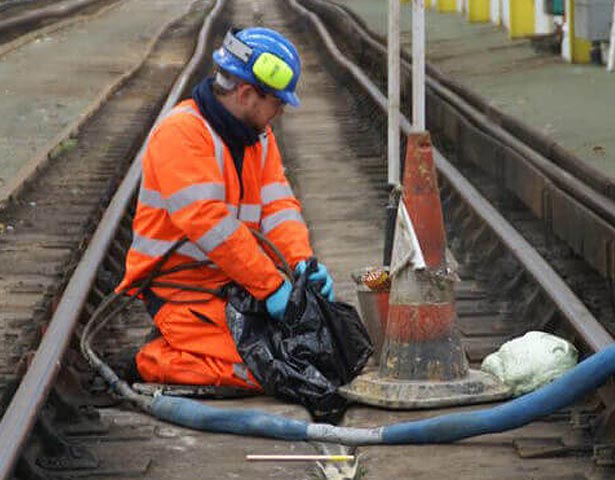
Polyurethane injection stabilizes weak subgrade beneath ballast, fills voids, and lifts track back to design grade through small access points between ties. Work occurs during brief track outages, allowing normal operations to resume within hours. Material withstands dynamic loading without deterioration.
Rail Infrastructure Requiring Minimal Disruption
- Mainline Track: Stabilize active corridors during brief maintenance windows
- Yard Track: Restore grade in switching yards without extended shutdowns
- Grade Crossings: Lift and stabilize road surfaces at rail crossings
Seawall & Embankment Stabilization: Stop Erosion Before Structures Fail
When Water Washes Away Support
Seawall voids form when water erodes backfill through joints, cracks, or storm damage. Without support, walls crack, lean, and eventually collapse, destroying property protection and requiring complete reconstruction. Embankment erosion undermines roadways, creates slope failures, and threatens adjacent infrastructure.
Seal Joints. Restore Stability.
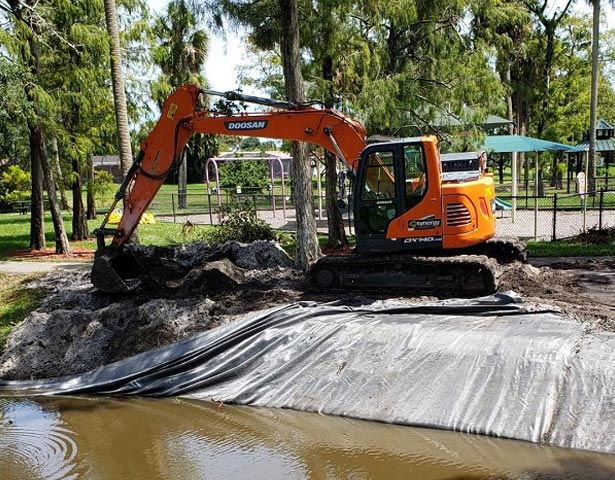
Polyurethane injection fills voids behind seawalls, creating solid support that prevents further movement. Material seals joints and cracks, stopping water intrusion that causes continued erosion. Embankment stabilization fills internal voids and compacts loose soil into stable slopes.
Coastal and Waterfront Infrastructure Protection
- Seawalls: Fill voids and prevent collapse, protecting waterfront properties
- Commercial Bulkheads: Stabilize marine terminals and industrial waterfront facilities
- Embankment Slopes: Prevent erosion-driven failures threatening roadways and structures
MSE: Restore Walls Without Reconstruction
When Internal Erosion Threatens Stability
MSE walls fail when soil erodes through drainage issues, allowing voids to form behind facing panels. Bulging panels, cracks, and settlement signal internal instability that progresses toward catastrophic collapse. Reconstruction requires removing walls, excavating backfill, and rebuilding (months of work costing millions).
Stabilize Internally. Prevent Collapse. Extend Service Life.
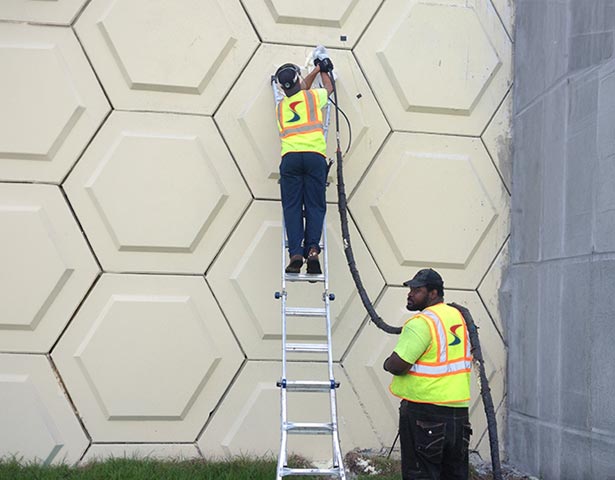
Polyurethane injection fills voids behind panels, stabilizes eroded soil, and restores internal support without dismantling walls. Pressure-controlled injection prevents panel displacement while achieving complete void fill. Work is completed through small drill holes in panels or from wall top, eliminating excavation.
Applications Preventing Catastrophic Failure
- Highway Retaining Walls: Stabilize DOT walls showing settlement or panel distress
- Commercial Site Walls: Restore stability to walls supporting parking lots and structures
Civil and Drainage Enhancements Done RightInfrastructure Protected, Operations Uninterrupted
Learn how Shenandoah prevents settlement, eliminates voids, and protects infrastructure from progressive failures.
Tap Into Total Peace of Mind
When you know you have an all-in-one partner who has your back (and your infrastructure), you face the future with confidence.