
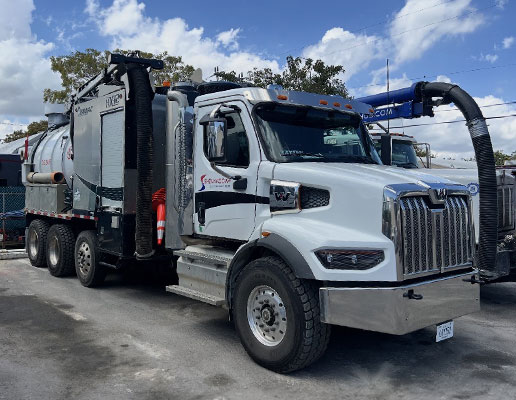
Expose utilities without damage. Work safely without guesswork.
Underground utilities rarely sit exactly where maps say they do. Mechanical excavation relies on approximate locate tickets and blind digging, making strikes on gas, fiber, water, or electric lines a constant risk. One wrong pass can shut down services, trigger emergency repairs, and derail schedules. In high-density utility corridors, a single fiber optic strike can cost upwards of $400,000 in repairs alone.
Hydro excavation uses high-pressure water to break up and loosen soil, while a powerful vacuum system lifts and stores the material in an onboard debris tank. The result is precise, non-destructive exposure of underground infrastructure. Extracted material can be deposited on-site or hauled off, and in many cases, it can be used directly as backfill when the work is complete.
Pin-Point Accuracy Starts Here
Expose utilities without damage. Work safely without guesswork. Shenandoah has been delivering infrastructure services since 1976, and hydro excavation is one of the most critical tools in that portfolio. Here's what the process looks like from mobilization through completion:
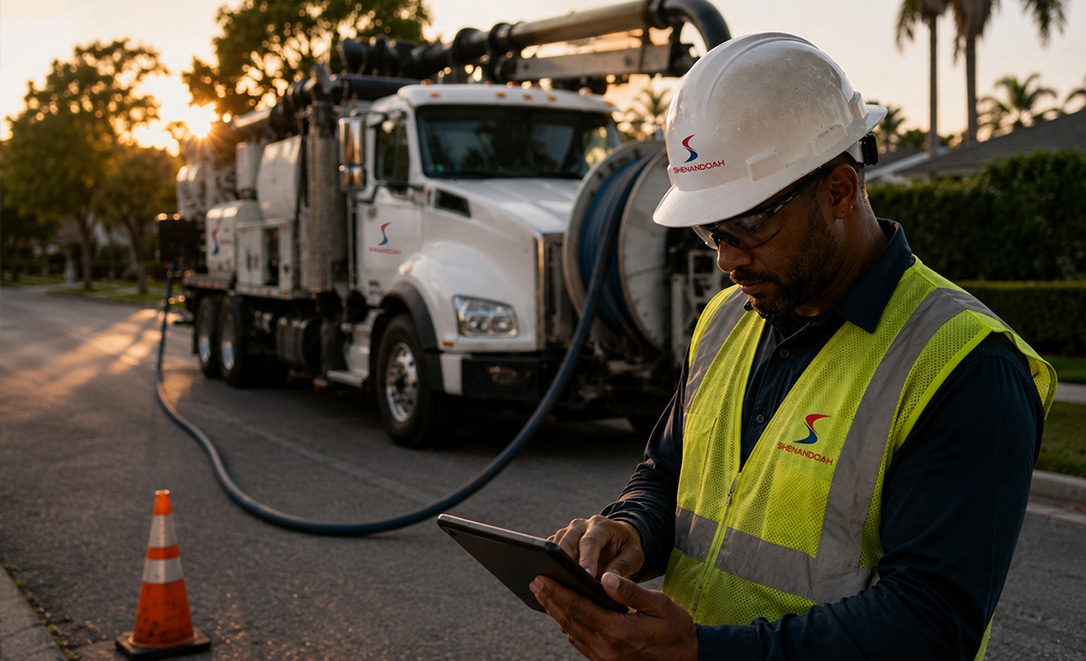
Before we move any equipment, we coordinate with 811 to submit locate requests. Once paint is on the ground, the team reviews the utility map, identifies high-conflict zones, and plans pothole locations along the dig path.
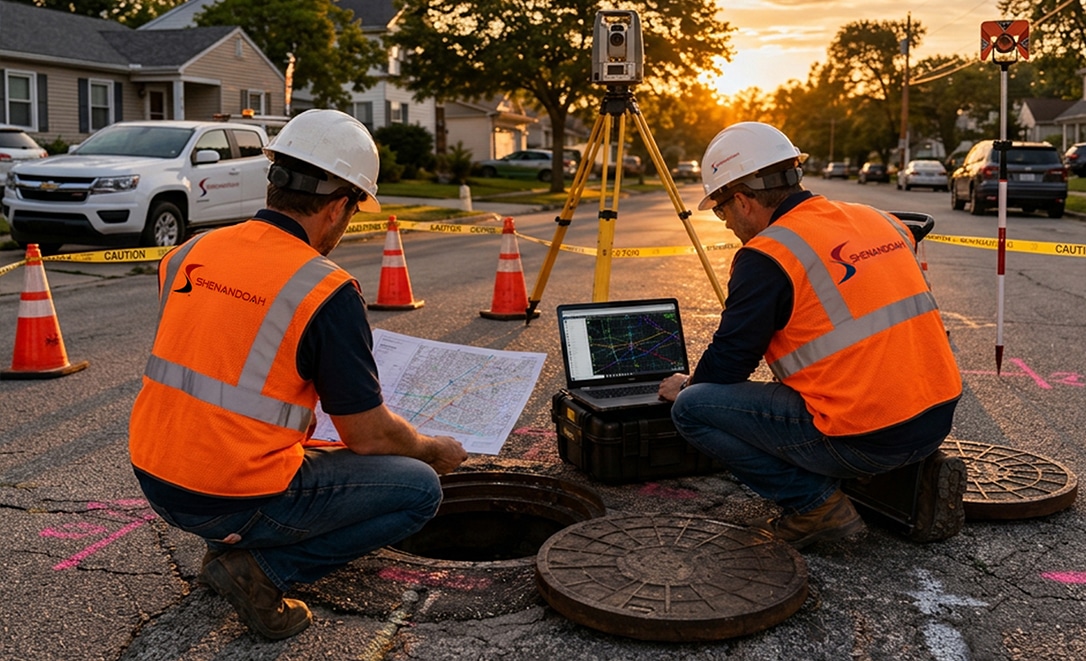
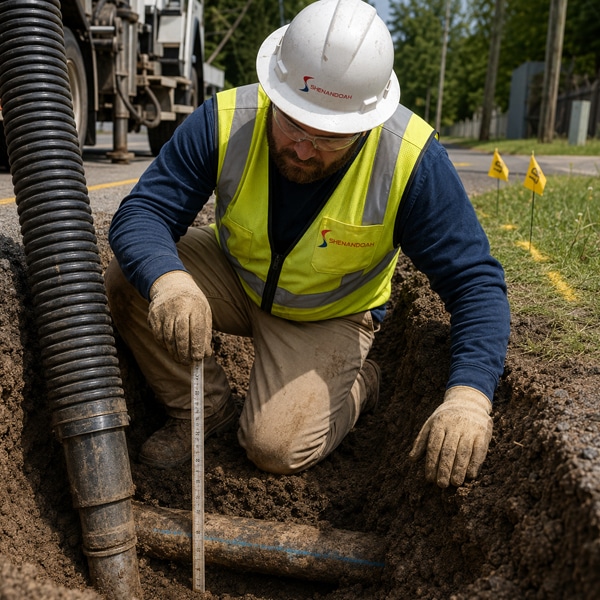
Shenandoah’s crews use potholing–also called daylighting–to physically expose utilities at proposed crossing points. This step confirms the exact depth, orientation, and condition before any boring, trenching, or construction equipment is brought in. For a directional drilling operation running 500 feet down a road that crosses multiple water services, sewer laterals, and gas lines, every single one of those utilities gets potholed first.
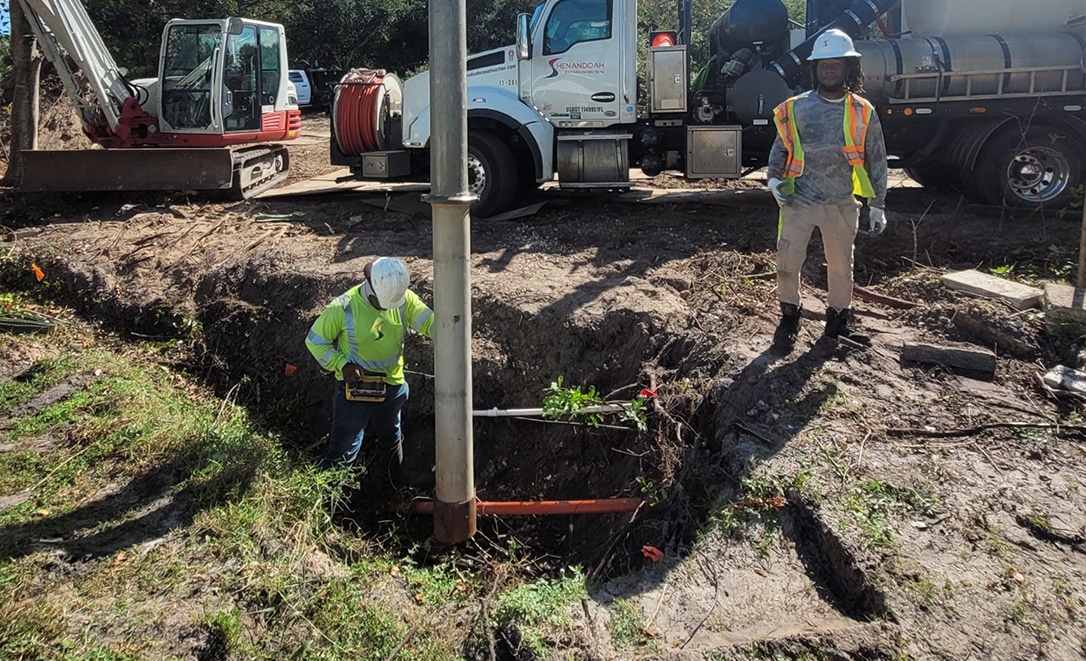
High-pressure water jets loosen the soil around the target area while the vacuum system continuously removes material into the debris tank. Flexible remote hoses can extend up to 500 feet from the truck, allowing work in areas where the vehicle itself cannot access. This includes tight utility corridors, active roadways, fenced facilities, and congested job sites.
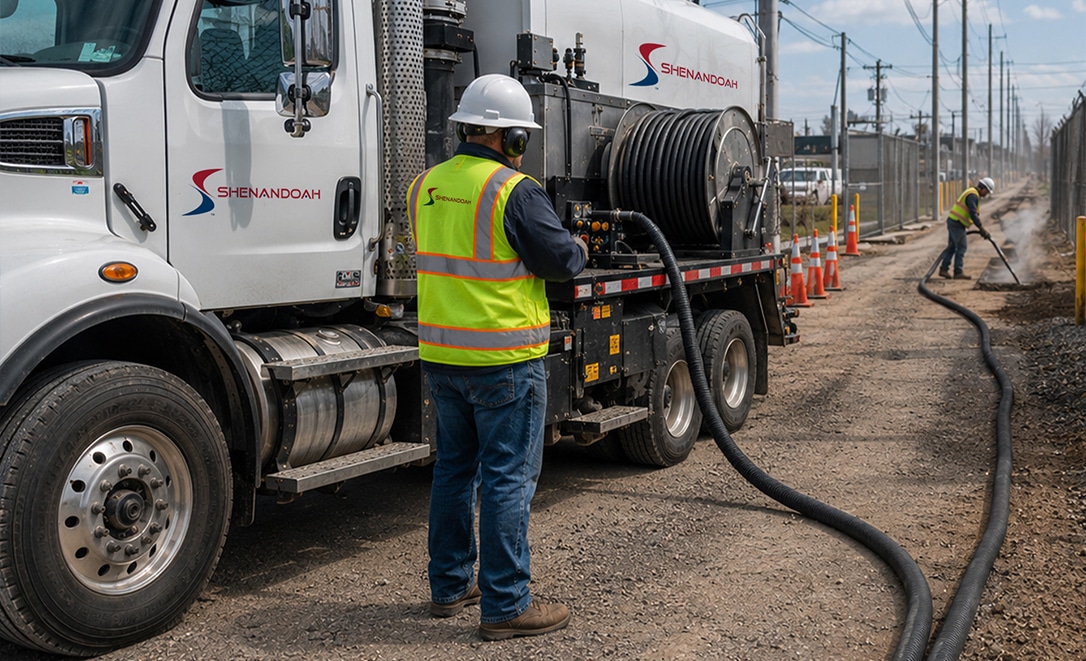
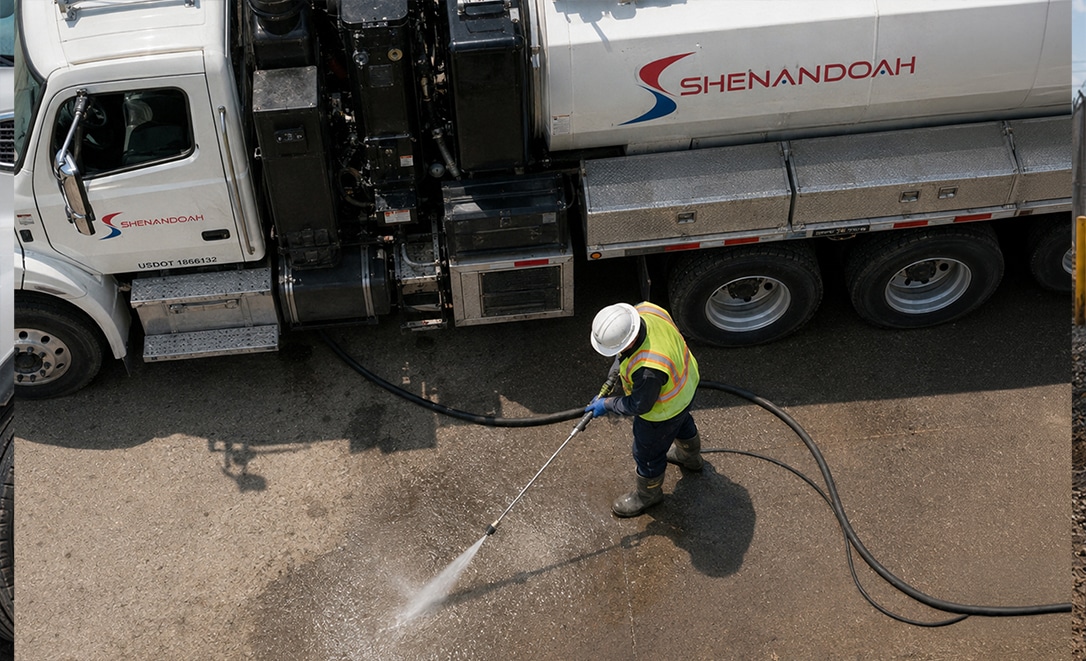
Excavated material is stored in the onboard slurry tank for on-site reuse as backfill or hauled off for disposal. When work wraps up, Shenandoah’s trucks use their high-pressure water systems to clean the entire work area. When a crew leaves, the site looks like nobody was ever there.
Customers receive a complete report documenting what was found, where it sits, and any utility conflicts identified. Project teams show up to work knowing exactly what is in the ground, at what depth, and whether the original plan can proceed or needs adjustment.
Step 1: Pre-Dig Coordination
Step 2: Potholing (Daylighting) to Verify Exact Locations
Step 3: Soft Dig Excavation
Step 4: Material Handling and Site Restoration
Step 5: Reporting
Before we move any equipment, we coordinate with 811 to submit locate requests. Once paint is on the ground, the team reviews the utility map, identifies high-conflict zones, and plans pothole locations along the dig path.
Shenandoah’s crews use potholing–also called daylighting–to physically expose utilities at proposed crossing points. This step confirms the exact depth, orientation, and condition before any boring, trenching, or construction equipment is brought in. For a directional drilling operation running 500 feet down a road that crosses multiple water services, sewer laterals, and gas lines, every single one of those utilities gets potholed first.
High-pressure water jets loosen the soil around the target area while the vacuum system continuously removes material into the debris tank. Flexible remote hoses can extend up to 500 feet from the truck, allowing work in areas where the vehicle itself cannot access. This includes tight utility corridors, active roadways, fenced facilities, and congested job sites.
Excavated material is stored in the onboard slurry tank for on-site reuse as backfill or hauled off for disposal. When work wraps up, Shenandoah’s trucks use their high-pressure water systems to clean the entire work area. When a crew leaves, the site looks like nobody was ever there.
Customers receive a complete report documenting what was found, where it sits, and any utility conflicts identified. Project teams show up to work knowing exactly what is in the ground, at what depth, and whether the original plan can proceed or needs adjustment.
From Mechanical Risk to Precise Exposure
Before: High Risk, High Cost When Things Go Wrong
Mechanical excavation moves fast but without visibility. Depths vary, records are outdated, and unmarked lines exist. When strikes occur, work stops while emergency repairs are completed and investigations are conducted to determine the cause. Delays cascade through schedules, idling crews and equipment while owners absorb costs. Companies have been driven out of business by an unexpected utility hit.
After: Excavation With Total Control
Shenandoah’s hydro excavation process safely and precisely exposes underground infrastructure while minimizing disruption to the surrounding soil. Crews show up knowing what is in the ground ahead of them, whether conflicts exist, and whether the project can proceed as planned. The result is a cleaner site and projects that keep moving forward.
The Application-Wide Standard
Shenandoah's hydro excavation capability covers a wide range of project types and site conditions. Common applications include:
Directional Drilling Support
Before a drill crew shoots footage under a road, Shenandoah potholes the full run. Every water service, sewer lateral, and gas crossing is physically exposed and documented, providing the drill operator with exact clearances to work over or under each line.
Data Centers and Substations
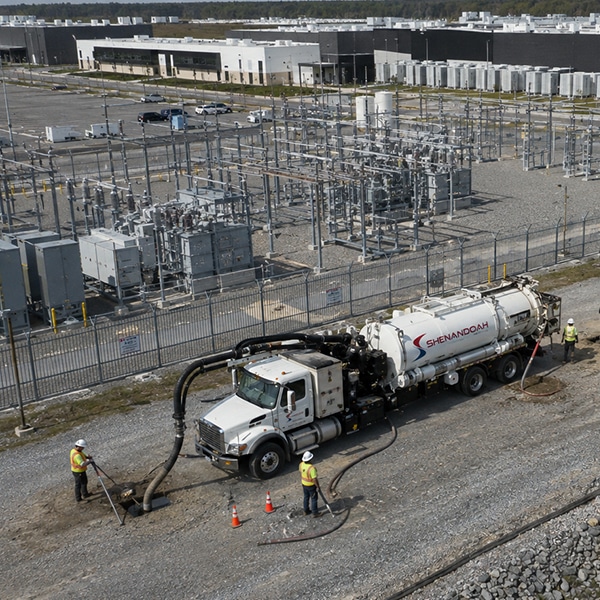
Data center construction and substation work are among the fastest-growing segments requiring hydro excavation. In substation environments specifically, no mechanical equipment is permitted on-site, and hydro vac trucks are the only option. With 60 or more vacuum trucks needed on some projects, this is a significant and growing portion of Shenandoah’s work.
Tight and Congested Sites
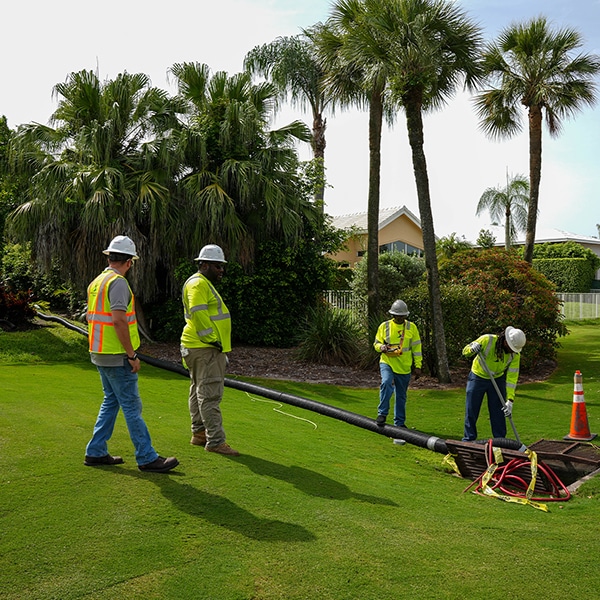
When heavy machinery can’t fit, Shenandoah runs flexible remote hoses up to 500 feet to reach the work area. One notable example: A major residential property with no equipment access required a pool to be excavated in the backyard. Shenandoah ran hose through the living room, completed the dig from the street, and left without a trace.
High-Security and Restricted Facilities
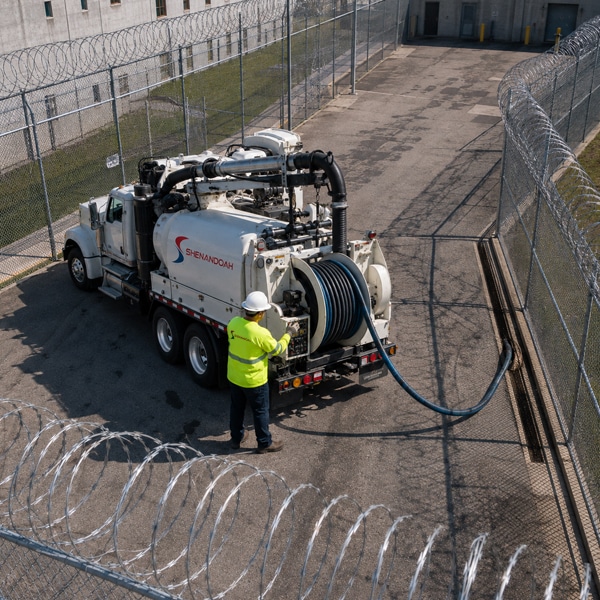
At a large correctional facility in West Palm Beach–adjacent to a busy regional airport–roadways were too tight for any mechanical equipment. A 50-person hand-dig crew had already been mobilized when Shenandoah positioned a hydrovac truck 300 feet from the site, extended the hose through the facility, and completed the trench. The job was done in a fraction of the time.
Hurricane and Disaster Response
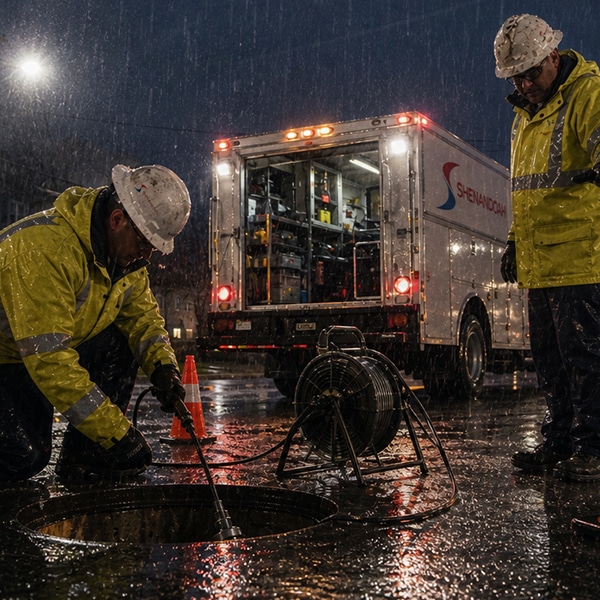
During and after natural disasters, 811 locate services are not operational. There is no paint on the ground, no utility markings, and standing water often covers everything. Shenandoah is actively deployed on FPL contracts where hydrovac trucks are kept on standby during storm events. When a pole needs to be raised to restore power to a hospital, Shenandoah confirms what’s there before any digging begins.
Slot Trenching and Piling Hole Excavation
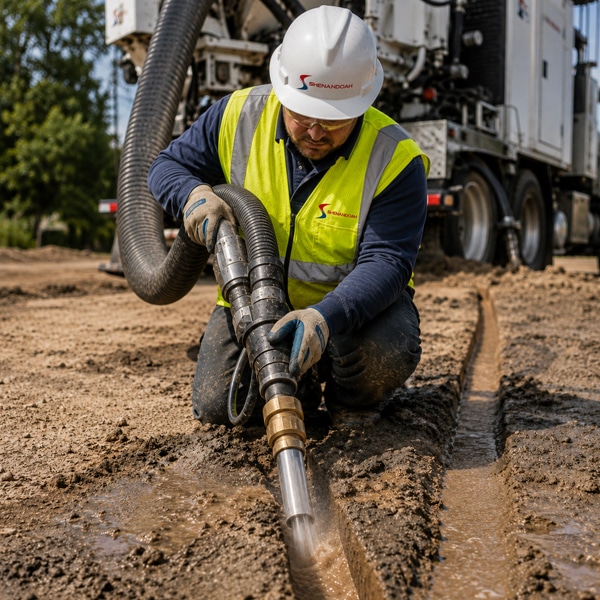
Narrow trench work for conduit, cable, and utility installations, as well as piling hole excavation for structural work, are both standard applications for Shenandoah’s soft-dig fleet.
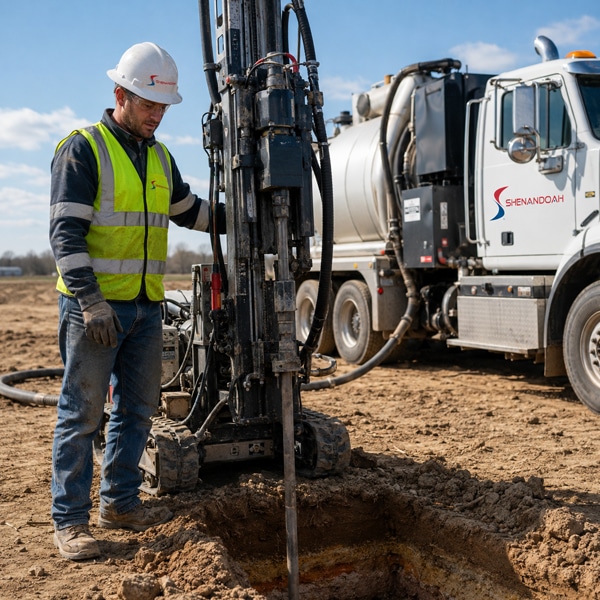
Geotechnical Drilling and Soil Stabilization
Shenandoah supports pre-construction site analysis by providing excavation access for geotechnical investigations and soil stabilization programs prior to construction.
Helpful Resources
Excavation, Inspection, and Construction All Under One Roof
Shenandoah’s teams use potholing to verify utility locations before trenching, boring, or construction begins, confirming positions, identifying conflicts, and allowing design adjustments before equipment mobilizes. This eliminates mid-project surprises that delay timelines and inflate costs.
Hydro excavation doesn’t operate in isolation at Shenandoah. It feeds directly into the company’s broader pipeline inspection, rehabilitation, and maintenance capabilities. Once utilities are exposed and verified, Shenandoah’s teams can transition into CCTV inspection, jetting, pipe lining, and other restoration services without a separate mobilization. That continuity is what eliminates handoff delays and keeps projects on schedule.
Frequently Asked Questions
Hydro excavation delivers safe, precise soil removal that eliminates equipment strikes, safety incidents, and service disruptions caused by mechanical methods.
Equipment strikes on gas lines, fiber optic cables, water mains, or electrical conduit trigger emergency responses, service outages, and regulatory investigations. A single fiber strike runs $400,000 or more in repairs. A gas main strike can effectively bring a company to its knees. Hydro excavation exposes utilities without contact, eliminating strikes that halt projects, disrupt communities, and generate liability claims that exceed excavation costs by orders of magnitude.
Mechanical excavation poses trench cave-in risks, electrocution hazards from severed lines, and confined-space dangers. Hydro excavation operates from the surface with controlled water pressure, keeping workers out of trenches until utilities are exposed and verified safe. This eliminates the safety incidents that trigger OSHA investigations and project shutdowns.
Mechanical equipment requires access space, swing radius, and maneuvering room that aren’t available near buildings, active roadways, or congested utility corridors. Hydro excavation trucks position at a distance and extend hoses to work areas, accessing tight locations where backhoes can’t operate without damaging adjacent infrastructure or disrupting traffic.
Locate tickets show approximate positions — not exact depths, orientations, or unmarked lines installed after records were created. Hydro excavation potholing exposes utilities at proposed crossing points before boring or trenching begins, confirming locations and allowing design adjustments that prevent conflicts discovered mid-project when costs multiply.
Mechanical trenching disturbs wide areas, compacts soil, and requires extensive backfill and compaction to restore original conditions. Hydro excavation removes only the soil necessary to expose utilities, creating narrow excavations that minimize disturbance. Extracted material can be returned as backfill, reducing material costs and restoration timelines.
Utility strikes halt projects while emergency repairs are completed and investigations determine fault. Delays cascade through schedules, idling crews and equipment while owners absorb costs. Hydro excavation prevents strikes that stop work, keeping projects on schedule and eliminating the delays that turn minor excavations into major budget overruns.