
When Size Rules Out Standard Lining
Large-diameter infrastructure demands a different rehabilitation approach.
CIPP lining works well for small to mid-sized pipes, but it reaches practical limits around 48 inches. Beyond that, installation becomes unreliable, curing is inconsistent, and structural demands exceed what fabric-based liners can deliver. Spray Applied Pipe Lining (SAPL) and spin casting restore structural integrity and extend service life when conventional trenchless methods fall short.
Trenchless Structural Lining at Any Scale
Before: Limited, Costly Options
Large-diameter pipe failures force impossible choices. CIPP can’t handle the diameter. Slip lining kills capacity. Replacement means months of excavation, lane closures, and million-dollar budgets. Meanwhile, the pipe keeps failing and liability keeps growing.
After: Rebuild Without Compromise
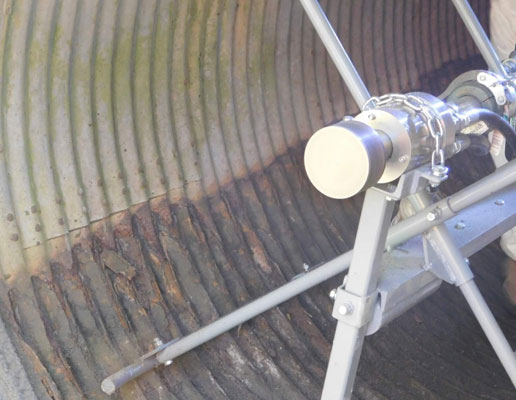
SAPL and spin casting rebuild pipes from the inside, restoring strength and performance without open-cut construction. This approach delivers load-bearing liners that work at large diameters, in irregular shapes, and in deteriorated pipes — extending service life and stabilizing assets where other trenchless solutions fall short.
One Team From Assessment to Verification
We deliver end-to-end SAPL excellence, from assessment and preparation to lining application and post-installation verification. The result? Fewer handoffs, tighter quality control, and more accurate timelines.
Strength Where Fabric Falls Short
SAPL creates structurally independent liners for pipes CIPP can’t reliably rehabilitate.
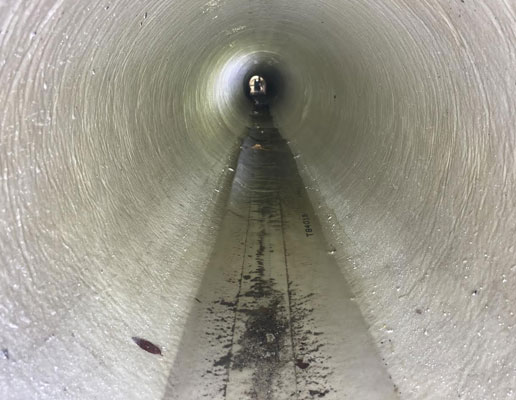
SAPL forms structurally independent liners engineered for 50+ year service lives, delivering performance comparable to new pipe at a fraction of replacement cost. Cementitious materials resist corrosion, tolerate H₂S environments that degrade CIPP, and maintain strength under sustained loading. Because the liner carries loads independently, it continues to perform even as the original pipe continues to age.
While CIPP typically struggles beyond 48 inches, SAPL scales to diameters up to 144 inches. Centrifugal application applies mortar evenly across large cross-sections, maintaining uniform thickness and structural integrity regardless of size.
Storm mains, box culverts, and interceptor sewers that once required excavation can now be rehabilitated through existing access points with minimal surface disruption.
CIPP relies on circular pipes to inflate and cure properly. SAPL doesn’t. Spray application and spin casting allow cementitious mortar to conform to egg-shaped culverts, horseshoe sewers, arch pipes, and box structures — geometries common in older systems and large stormwater infrastructure. The liner builds consistent thickness and strength even where fabric liners can’t make full contact.
Cracks, separated joints, and failing mortar allow groundwater to enter pipes, reducing capacity and overloading treatment systems. SAPL forms a monolithic, jointless liner that chemically bonds to prepared surfaces, permanently sealing infiltration pathways. As I&I is eliminated, systems regain hydraulic capacity, helping defer costly expansions and reduce operating costs.
As large-diameter pipes deteriorate, they lose the ability to support earth and traffic loads, leading to settlement and voids that threaten roads and utilities. SAPL liners are designed as structurally independent systems (engineered to ASTM F1216 or ASTM F1743 standards), to carry full loads without relying on the host pipe. Shenandoah’s spray application and spin casting solutions prevent collapse and protect surface infrastructure from subsidence damage.
Replacing large pipes typically means months of excavation, lane closures, and utility relocation. Spray application and spin casting accesses pipes through existing manholes, eliminating open-cut construction and keeping traffic moving. Projects finish in days instead of months, allowing communities, businesses, and emergency services to operate without interruption.
SAPL succeeds in environments that stop CIPP installation, including severely deformed pipes, non-circular structures, deteriorated brick sewers, and systems with active flow or limited bypass capacity. Specialized surface preparation and controlled application techniques deliver structural renewal where other trenchless options fall short and full replacement is often the only alternative.
Large Pipes, Lasting Solutions
Explore how Shenandoah’s spray application and spin casting technology rehabilitates infrastructure other trenchless methods can’t handle.
Tap Into Total Peace of Mind
When you know you have an all-in-one partner who has your back (and your infrastructure), you face the future with confidence.