

Your First Line of Defense: Visibility
Most infrastructure failures start underground when sediment, roots, joint separation, and cracks develop silently until systems fail. Without cleaning and inspection, maintenance becomes reactive firefighting. Shenandoah’s cleaning and inspection services eliminate uncertainty by turning underground unknowns into actionable intelligence that drives strategic maintenance, justifies capital investments, and prevents costly disruptions.
From Guesswork to Governance
Cleaning prepares systems for inspection. Inspection reveals what needs repair. Together, they create the foundation for strategic infrastructure management.
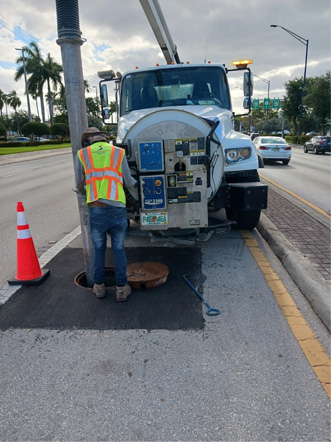
Stormwater & Sanitary System Cleaning
Our jet-vac cleaning pairs high-pressure water jetting (up to 4,000 PSI) with vacuum extraction to clear catch basins, storm drains, and pipelines. We flag defects pre-cleaning and verify results post-cleaning with CCTV inspections.

Pipeline Video Assessment & Inspection (CCTV)
You can’t fix what you can’t see. We deploy robotic CCTV cameras to capture real-time video of cracks, roots, joint separation, and structural defects with GPS-located accuracy. Then, you receive footage and reports identifying what needs repair.

Stormwater & Sanitary System Mapping
Accurate maps replace underground guesswork with control. GIS mapping physically locates and digitally documents catch basins, manholes, pipe runs, materials, and flow paths. Mapping helps crews respond faster, forecast accurately, and prioritize maintenance better.
Where Strategy Gets Its Footing
Cleaning and inspection help determine whether pipes need sealing, lining, or replacement and in what order. When one team handles cleaning, inspection, rehabilitation, and maintenance, decisions flow directly from data to action without coordination gaps or accountability shifts.
Helpful Resources
Frequently Asked Questions
Proactive cleaning and inspection turn underground uncertainty into actionable intelligence.
Explore the answers below to see how Shenandoah helps municipalities and facilities prevent failure, control costs, and manage infrastructure with confidence.
Stormwater and sanitary system cleaning services remove sediment, debris, roots, grease, and blockages from underground pipelines, catch basins, and manholes. Shenandoah uses high-pressure hydro jetting (up to 4,000 PSI) paired with vacuum extraction (jet-vac) to restore flow capacity and prepare pipelines for accurate CCTV inspection. Regular cleaning reduces the risk of backups, flooding, and regulatory violations.
Storm drains and sanitary sewers fail quietly. Sediment buildup, root intrusion, and joint separation can restrict flow long before visible surface issues appear. Routine cleaning:
- Prevents emergency overflows and flooding
- Extends pipeline lifespan
- Reduces reactive maintenance costs
- Supports compliance with municipal stormwater regulations
- Improves the accuracy of pipeline inspection
Proactive cleaning transforms maintenance from crisis response to strategic infrastructure management.
Closed-circuit television (CCTV) pipeline inspection uses robotic cameras inserted into pipelines to capture real-time video footage of internal conditions. Shenandoah’s CCTV inspections identify:
- Cracks and fractures
- Root intrusion
- Joint separation
- Offset connections
- Structural deterioration
Each defect is GPS-located and documented in a detailed report, giving municipalities and facility managers actionable data to prioritize repairs.
Inspection frequency depends on system age, material, soil conditions, and usage. Best practice typically includes:
- Annual or bi-annual cleaning in high-debris areas
- CCTV inspection every 3–5 years for stable systems
- Immediate inspection following flooding, backups, or major construction
A preventive inspection schedule reduces capital shock and helps forecast long-term rehabilitation budgets.
Geographic Information System (GIS) mapping digitally documents underground infrastructure including pipe runs, manholes, catch basins, materials, and flow direction. Shenandoah’s stormwater and sanitary mapping services replace incomplete records with accurate, field-verified data.
Benefits include:
- Faster emergency response
- Smarter capital planning
- Improved asset management
- Reduced excavation guesswork
GIS mapping provides the governance layer that turns inspection data into strategic decision-making.
Shenandoah’s cleaning and inspection services uncover early-stage issues such as:
- Sediment accumulation reducing flow capacity
- Minor cracks before structural collapse
- Root growth before full obstruction
- Joint displacement before infiltration increases
Early detection lowers total lifecycle cost and prevents disruptive system failures.
Yes. Shenandoah delivers integrated stormwater and sanitary system cleaning, CCTV inspection, and mapping services under one team. Cleaning prepares the system. Inspection identifies defects. Mapping documents infrastructure.
When one provider manages all three, there are no coordination gaps, data silos, or accountability shifts.
Cleaning and inspection generate verified field data that informs:
- Rehabilitation planning (lining, sealing, replacement)
- Budget forecasting
- Risk prioritization
- Capital improvement planning
- Regulatory documentation
Instead of reacting to failures, asset managers gain visibility and control over long-term infrastructure performance.
Shenandoah supports:
- Municipal public works departments
- Industrial facilities
- Commercial property managers
- Utilities and water authorities
- Transportation infrastructure agencies
Any organization responsible for underground stormwater or sanitary infrastructure benefits from proactive cleaning, inspection, and mapping.
You can request more information directly through the Shenandoah website. Our team will assess your system size, condition, and goals to recommend a customized cleaning and inspection plan designed to reduce risk and optimize maintenance budgets.
Yes. Shenandoah provides 24/7 emergency response for stormwater and sanitary infrastructure, including jet-vac cleaning, CCTV inspection, and urgent blockage removal. When backups, flooding, or system failures threaten operations or public safety, our crews mobilize quickly to restore flow, assess damage, and deliver actionable data for next steps.