
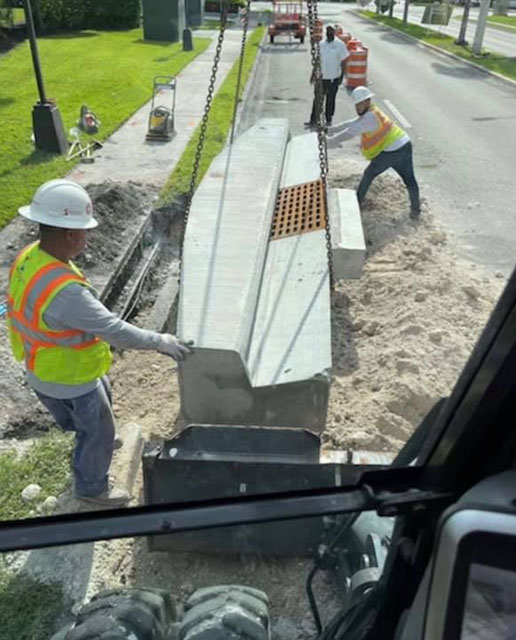
Protect Infrastructure Above and Below Ground
When settlement and erosion begin to compromise infrastructure, organizations sometimes defer action to avoid disruption — only to face larger failures later. We address the concerns threatening your infrastructure’s integrity using the least invasive procedures possible.
From polyurethane injection for stabilization to hydro excavation, our solutions work alongside pipe rehabilitation to solve problems that extend beyond pipeline networks.
Specialized Solutions for Complex Problems
When infrastructure issues extend beyond pipe failures to soil stability, structural settlement, and utility conflicts, we deploy targeted technologies that address root causes.
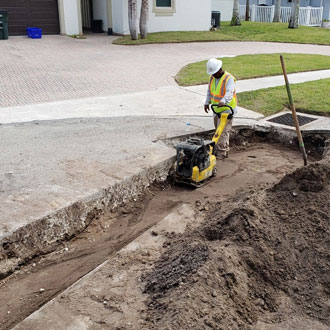
Civil & Drainage Enhancements
When pipes are too damaged for lining or drainage can’t handle flow, open-cut construction delivers permanent solutions. Replace collapsed pipes, upgrade capacity, install tide control, and restore canal banks.
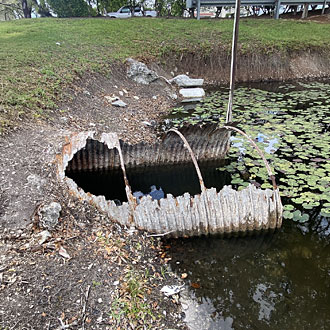
Culvert Repair & Restoration
Leaking joints erode soil and undermine culverts and roads. Polyurethane injection fills voids, compacts soil, lifts settled structures, and seals leaks — restoring load-bearing capacity and preventing emergency closures.
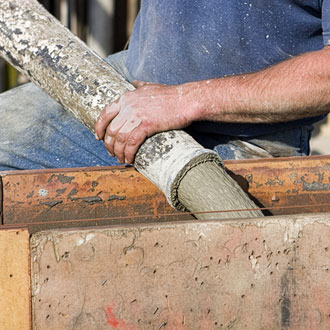
Pipeline Abandonment
Abandoned pipes collapse over time, causing sinkholes and contamination. Pressure grouting fills pipes completely, stabilizes soil, and eliminates collapse risk without excavation. CCTV inspection verifies fill and provides compliance documentation.
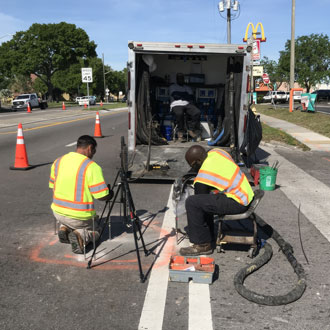
Soil Stabilization & Seawall Repair
Eroded soil undermines foundations and creates voids beneath structures. Polyurethane injection fills voids and compacts loose soil into stable support, restoring load-bearing capacity and sealing seawall joints without excavation.
From Isolated Problems to Connected Solutions
Our end-to-end approach integrates each specialty service with pipe rehabilitation and cleaning and inspection services, so you know exactly what offering you need and why. When one team coordinates assessment, execution, and verification across multiple disciplines, you address the root problem instead of disconnected systems.
Helpful Resources
Frequently Asked Questions
Infrastructure failures rarely start in the pipe alone. Soil erosion, structural settlement, drainage failures, and abandoned utilities can all compromise the systems that support roads, bridges, facilities, and underground networks. Our specialty services address these challenges directly, using targeted technologies like polyurethane injection, pressure grouting, hydro excavation, and structural lifting to stabilize soil, restore load-bearing capacity, and prevent costly failures. By solving problems both above and below ground, we help organizations protect critical infrastructure while minimizing disruption to operations.
Specialty infrastructure services address problems that occur around pipelines and underground utilities, including soil instability, structural settlement, void formation, and drainage failures. These services stabilize the ground, lift or support structures, seal leaks, and restore drainage capacity. Techniques such as polyurethane injection, pressure grouting, hydro excavation, and open-cut construction allow engineers to repair and stabilize infrastructure with minimal disruption to roads, facilities, and operations.
Soil stabilization is needed when erosion, void formation, or loose soil begins to compromise the support beneath roads, foundations, bridges, seawalls, or utilities. Common warning signs include pavement settlement, bridge approach slab drop-offs, sinkholes, leaking culverts, or shifting structures. Stabilization techniques such as polyurethane injection fill voids, compact loose soil, and restore load-bearing capacity without excavation.
Polyurethane injection stabilizes infrastructure by injecting expanding polymer beneath slabs, foundations, or soil voids. The material expands to fill empty spaces, compacts surrounding soil, and lifts settled structures back to grade. The foam cures rapidly — often in minutes — allowing roads, bridges, and facilities to reopen quickly while restoring structural support.
Bridge approach slabs settle when soil beneath the slab erodes, consolidates, or loses compaction over time. Water infiltration, poor drainage, and leaking joints often accelerate this process. When slabs drop below grade, vehicles experience a dangerous bump entering or leaving the bridge. Polyurethane injection lifting and soil stabilization restore the slab to proper elevation and prevent further settlement.
Leaking culverts can often be repaired using polyurethane injection or grouting techniques that seal joints, fill voids, and compact surrounding soil. These methods stop water infiltration that erodes soil beneath roadways and restores structural support without removing the culvert or excavating the roadway. This approach minimizes traffic disruption while preventing larger failures.
Pipeline abandonment is the process of permanently decommissioning unused or obsolete pipelines. If left empty, abandoned pipes can collapse, create underground voids, or allow soil migration that leads to sinkholes. Pressure grouting fills the pipe completely with structural material, stabilizing surrounding soil and eliminating collapse risk. CCTV inspection verifies proper filling and provides documentation for regulatory compliance.
Open-cut construction is required when pipes are too structurally damaged for trenchless rehabilitation or when systems must be upgraded to handle increased capacity. In these situations, crews excavate the affected area to replace collapsed pipe, install larger drainage systems, repair canals, or add tide control structures. While more invasive than trenchless repair, open-cut solutions provide permanent infrastructure upgrades when rehabilitation is not possible.
Hydro excavation uses pressurized water and vacuum extraction to safely remove soil around underground utilities. This technique is commonly used to expose pipelines, locate utilities, remove debris, and prepare areas for repair work without damaging existing infrastructure. It is safer and more precise than traditional mechanical excavation.
Many infrastructure failures originate outside the pipe itself, such as soil erosion, void formation, or structural settlement. Specialty services address these surrounding issues so pipe rehabilitation solutions like CIPP lining can perform effectively. When stabilization, sealing, and pipe repair are coordinated together, infrastructure owners solve the root cause of failure rather than just the symptom.
Infrastructure settlement often begins gradually but can escalate into road collapses, bridge damage, sinkholes, or emergency closures if ignored. Early intervention using stabilization techniques prevents larger failures, reduces emergency repair costs, and avoids prolonged operational disruption. Addressing settlement early protects both public safety and long-term infrastructure performance.