Managing utility infrastructure has never been more complex. Aging systems, regulatory pressures, budget constraints, and increasing service demands are forcing utility companies to rethink how they approach maintenance and rehabilitation projects.
Traditionally, utilities have managed infrastructure needs by working with multiple specialized contractors: one for pipeline inspection, another for rehabilitation, a third for emergency repairs, and yet another for documentation and compliance reporting.
But this fragmented approach is creating more problems than it solves. Forward-thinking utilities are discovering that integrated solutions from a single, comprehensive partner deliver better results, lower costs, and significantly less operational headaches.
Here’s why the shift toward one-stop infrastructure partners is accelerating across the utility sector.
The Hidden Costs of Managing Multiple Contractors
Coordination Complexity
Every additional contractor adds layers of complexity to project management. Scheduling conflicts, communication gaps, and finger-pointing when problems arise can turn straightforward projects into logistical nightmares.
Utilities often find themselves acting as general contractors, coordinating between specialists who may have never worked together before. This diverts valuable internal resources from core operations to project management tasks.
Extended Project Timelines
When multiple contractors must sequence their work, projects inevitably take longer. Weather delays, equipment conflicts, and coordination issues compound, extending timelines and increasing costs.
Accountability Gaps
When problems arise, determining responsibility becomes complicated. Was it the inspection contractor’s missed assessment, the cleaning contractor’s incomplete work, or the rehabilitation contractor’s installation issue? These accountability gaps can delay resolution and increase costs.
The Integrated Solutions Advantage
Streamlined Project Management
Working with a comprehensive infrastructure partner eliminates coordination complexity. One team handles everything from initial assessment through final documentation, with internal coordination that utilities never have to manage.
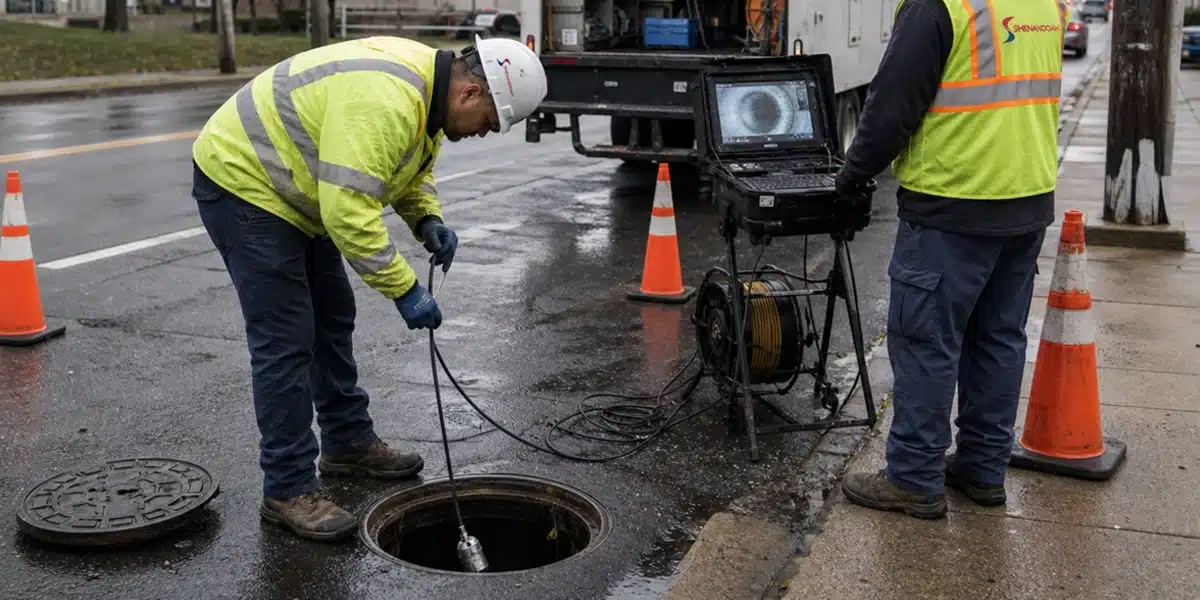
At Shenandoah, our integrated approach means the same team that conducts your CCTV inspections also handles the cleaning, rehabilitation, and final verification. This continuity ensures nothing falls through the cracks.
Consistent Quality Across All Services
One company means one set of quality standards, safety protocols, and performance guarantees. Whether we’re conducting pipeline inspections or performing trenchless rehabilitation, utilities can expect the same level of excellence across all services.
Faster Project Completion
Integrated teams work more efficiently because they understand how each phase connects to the next. Our crews can often complete comprehensive rehabilitation projects 30-40% faster than coordinated multi-contractor approaches.
Single Point of Accountability
When you work with a one-stop infrastructure partner, there’s never a question about responsibility. One company, one contact, one guarantee covering all work performed.
Enhanced Capabilities Through Strategic Growth
The utility services landscape is evolving rapidly, and leading infrastructure partners are expanding their capabilities to meet growing demands.
Shenandoah’s recent strategic acquisitions of Pro-Pipe and Nu-Pipe have significantly enhanced our ability to serve utilities across expanded geographic regions with even greater technical expertise and service capacity.
These partnerships strengthen our position as a true one-stop shop for utility infrastructure needs, combining decades of specialized experience with comprehensive service offerings that address every aspect of underground infrastructure management.
Technology Integration and Data Management
Modern utilities need more than just repair services; they need comprehensive data and documentation that support asset management and regulatory compliance.
Integrated infrastructure partners can provide seamless data collection and reporting across all services. When the same team handles inspection, cleaning, and rehabilitation, the resulting documentation is comprehensive and consistent.
This integrated approach supports better asset management decisions and provides the detailed records utilities need for regulatory compliance and long-term planning.
Cost Efficiency Through Bundled Services
While specialized contractors may appear less expensive on individual line items, the total cost of managing multiple contractors often exceeds the investment in comprehensive services from a single partner.
Bundled services eliminate duplicate mobilization costs, reduce project management overhead, and often include volume discounts that aren’t available when services are purchased separately.
More importantly, integrated solutions reduce the risk of costly change orders and project delays that frequently occur when multiple contractors encounter unexpected conditions.
Emergency Response Capabilities
Infrastructure emergencies don’t wait for convenient scheduling. When systems fail, utilities need immediate response from partners who can handle any type of problem.
One-stop infrastructure partners maintain the equipment, expertise, and availability to respond to diverse emergency situations. Whether it’s a pipeline failure, pump station issue, or storm-related damage, comprehensive partners can mobilize complete solutions immediately.
The Future of Utility Infrastructure Management
As infrastructure challenges continue to grow, utilities that embrace integrated solutions gain significant competitive advantages. Streamlined operations, consistent quality, and comprehensive capabilities position these utilities to better serve their communities while managing costs effectively.
The shift toward one-stop infrastructure partners is a strategic response to the complex challenges facing modern utility operations.
Ready to explore how integrated infrastructure solutions can benefit your utility operations? Contact Shenandoah today to discuss how our comprehensive approach can streamline your infrastructure management while improving results and reducing costs.