

Time-Tested Technology That Just Works
Slip lining is the oldest trenchless rehabilitation method — and it's still used today because it works.
Traditional replacement requires excavating entire pipe sections, even when host pipes are structurally intact. Slip lining eliminates excavation by inserting a new pipe inside the old one, rehabilitating infrastructure that’s still viable at a fraction of replacement cost.
From Excavation to Insertion
Before: Digging Up Pipes That Don’t Need Replacing
Conventional replacement means excavating entire runs, removing host pipes, installing new sections, and restoring surfaces, even when existing pipes are structurally intact but corroded or leaking. Costs escalate quickly as excavation, traffic control, and restoration compound.
After: Insert a New Pipe, Skip the Dig
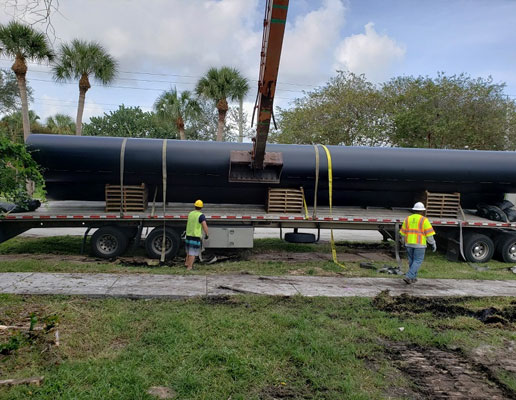
Shenandoah’s slip lining inserts high-density polyethylene pipe into cleaned host pipes. The lightweight liner is pushed or pulled into place, then sealed with chemical grouting. The result: a corrosion-resistant pipe within a pipe that eliminates leaks and can deliver 100+ years of service.
Powered by Cutting-Edge Inspection Technology
Slip lining works best when host pipes are structurally sound, flow capacity reduction is acceptable, and diameter allows for liner installation. Shenandoah’s teams use CCTV inspection to determine whether slip lining, CIPP, sectional repair, or replacement delivers the best outcome.
A Stronger Pipe System Starts Here
Slip lining turns aging infrastructure into a high-performance, corrosion-proof system designed to operate reliably for generations.
HDPE slip liners resist corrosion, chemical attack, and abrasion and can deliver 100+ years of service in conditions that degrade traditional materials within decades. All of this to say, slip liners aren’t a means to an end. They’re tried-and-true infrastructure that often outlasts the original host pipe and serves multiple generations without replacement. Installations from the 1970s are still operating today.
HDPE is completely impermeable to water and resistant to chemicals, hydrogen sulfide gases, and aggressive soil conditions that corrode metal and concrete, so slip lines prevent groundwater infiltration that often overloads treatment plants.
The result? Watertight systems that perform consistently in high water tables, corrosive soils, and chemically aggressive environments where traditional materials fail.
CIPP relies on circular pipes to inflate and cure properly. SAPL doesn’t. Spray application and spin casting allow cementitious mortar to conform to egg-shaped culverts, horseshoe sewers, arch pipes, and box structures — geometries common in older systems and large stormwater infrastructure. The liner builds consistent thickness and strength even where fabric liners can’t make full contact.
Slip liners provide structural support independent of the deteriorating host pipe. The inserted HDPE liner bears hydraulic loads, reinforces weakened sections, and prevents further wall degradation.
This dual-layer system (old pipe plus new liner) creates a composite structure that often exceeds the original pipe’s load-bearing capacity, eliminating collapse risk and extending service life without replacing infrastructure already in place.
While slip lining reduces internal diameter, HDPE’s exceptionally smooth interior surface (Manning’s n-value of 0.009) dramatically reduces friction loss compared to aged or corroded host pipes. In many cases, improved hydraulic efficiency offsets capacity reduction—allowing systems to maintain or exceed original flow rates while gaining corrosion resistance and structural reinforcement.
When damage is localized to specific joints or cracks, mechanical sleeves deliver trenchless benefits for point repairs. Stainless steel sleeves installed via CCTV-guided robotics seal individual defects without the cost or flow reduction of full-length rehabilitation.
This addresses critical failures immediately while preserving budget for larger rehabilitation projects down the road.
Slip-lined pipes require virtually no maintenance. HDPE resists root intrusion, doesn’t support biological growth, never corrodes, and maintains hydraulic efficiency without recurring cleaning or chemical treatment. Unlike host pipes requiring periodic maintenance, slip-lined systems operate for decades with minimal intervention. Capital invested in slip lining delivers returns measured in generations, not years.
Proven Methods Meet Modern Execution
Explore how the industry's oldest method continues delivering the longest-lasting results.
Tap Into Total Peace of Mind
When you know you have an all-in-one partner who has your back (and your infrastructure), you face the future with confidence.