
Reactive Maintenance Costs More Than Proactive Inspection
CCTV inspection, laser profiling, and smoke testing turn assumptions into verified data that drives smart repair decisions.
Most pipeline problems develop quietly underground, where they’re invisible until systems fail. By the time backups occur, flooding starts, or capacity drops, damage has progressed far beyond the initial defect. Shenandoah’s CCTV inspection, laser profiling, and smoke testing document defects, measure deterioration, and map failures so repairs target root causes, not symptoms.
Visual Proof Drives Better Decisions
Before: Assumptions, Excavation Without Visibility
Contractors excavate based on surface symptoms without confirming what’s actually broken underground. Without visual data, defects outside the dig zone remain undetected until the next emergency.
After: Documentation-Driven Rehabilitation
Inspection transforms infrastructure management from reactive firefighting to strategic planning. CCTV video shows what’s actually happening inside pipes. Laser profiling quantifies deformation and capacity loss. Smoke testing pinpoints inflow sources.
These methodologies create comprehensive condition assessments that support capital planning, justify budgets, and prevent the guesswork that leads to wasted repairs.
Connecting Inspection, Analysis, and Action
Shenandoah’s integrated model connects inspection and assessment to rehabilitation so findings drive actionable repair plans with prioritized timelines and verified scopes. When one team handles every facet of the job, accountability never shifts, and nothing gets lost between diagnosis and fix.
How We Assess System Health
Shenandoah deploys the right inspection technology based on pipe type, diameter, accessibility, and the specific defects being investigated.
CCTV Pipeline Inspection: real-time video that documents every defect
The Foundation of Condition Assessment
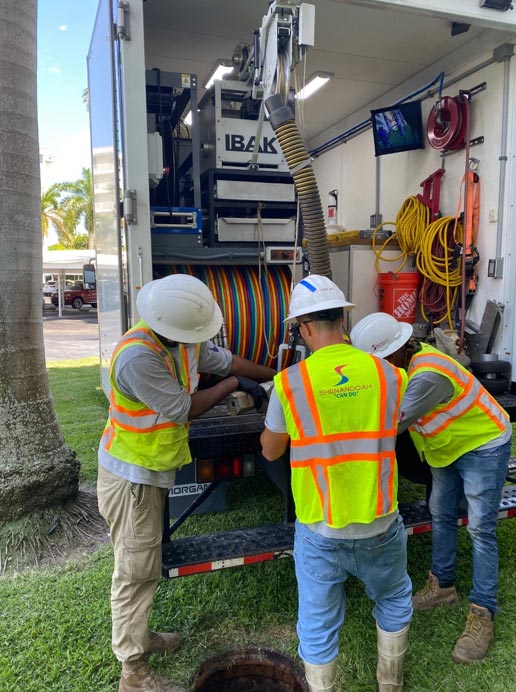
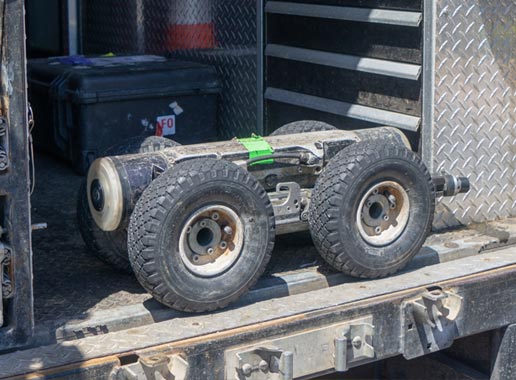
Robotic CCTV cameras travel through pipes, capturing real-time video of interior conditions. High-resolution imaging identifies cracks, root intrusion, joint separation, corrosion, grease buildup, and structural defects, documenting problems with actionable visual data.
Why Visual Documentation Matters
Proof Instead of Guesswork
CCTV inspection provides time-stamped, GPS-located documentation of every defect, creating records that justify capital expenditures, satisfy regulatory requirements, and prevent disputes over condition assessments.
Clients receive cloud-based links to full video inspections plus detailed analysis reports identifying issues and recommended actions.
When CCTV Is Essential
Applications That Demand Visual Verification
- Pre-Repair Assessment: Confirm defect locations and extents before rehabilitation begins.
- Post-Repair Verification: Document complete cleaning, successful lining installation, or proper joint sealing.
- Regulatory Compliance: Satisfy permit requirements, environmental assessments, and infrastructure reporting.
- Capital Planning: Build multi-year repair budgets grounded in documented conditions rather than estimates.
Advanced Capabilities
Technology That Sees Beyond Standard Video
Shenandoah’s CCTV fleet includes robotic systems equipped for pipeline mapping, sonar profiling in submerged conditions, and pan-and-tilt cameras that inspect laterals and complex junctions. Inspection data integrates with GIS mapping platforms, creating comprehensive system records that support long-term asset management.
Laser Profiling: Precision measurement of pipe Deformation
Quantifying Structural Deterioration
Laser profiling combines CCTV imaging with laser measurement technology, capturing precise 3D models of pipe interiors. The system measures diameter, ovality, joint offsets, and capacity loss with sub-millimeter accuracy, identifying deformation that reduces flow capacity and indicates structural compromise.
Why Measurements Matter
Data That Supports Engineering Decisions
Visual inspection shows that pipes are deformed. Laser profiling quantifies the deformation, providing engineers with measurements needed to assess structural integrity, calculate remaining capacity, and determine whether rehabilitation or replacement is required.
This data prevents under-scoping repairs that fail quickly and over-scoping replacements where rehabilitation would suffice.
Applications for Laser Profiling
When Precision Measurement Is Critical
- Capacity Analysis: Calculate actual flow capacity in deformed pipes, supporting hydraulic modeling and system expansion planning.
- Structural Assessment: Measure ovality and deflection to determine load-bearing capacity and predict remaining service life.
- Pre-Lining Verification: Confirm pipes meet dimensional requirements for CIPP or slip lining installation, preventing liner failures from improper fit.
- Regulatory Reporting: Provide quantified condition data that satisfies infrastructure assessment mandates and grant application requirements.
Smoke Testing: Surface-level detection of underground leaks
Visible Proof of Hidden Defects
Non-toxic smoke is introduced into isolated pipe sections under low pressure. The smoke travels through the system and escapes through any opening — cracked manholes, broken laterals, illegal connections, or abandoned lines. Technicians map every location where smoke surfaces, creating comprehensive records of inflow points that compromise system capacity.
Why Inflow Matters
The Hidden Cost of Leaking Systems
Inflow and infiltration (I&I) force treatment plants to process groundwater and stormwater that shouldn’t enter sanitary systems, driving up energy costs, reducing capacity, and triggering regulatory violations. Smoke testing identifies every entry point, allowing targeted repairs that eliminate I&I at its source rather than guessing at leak locations.
What Smoke Testing Reveals
Problems That Stay Hidden Until Smoke Surfaces
- Leaking Manholes: Deteriorated frames, failed seals, and cracked walls that allow surface water infiltration.
- Cross-Connections: Stormwater lines illegally connected to sanitary systems, introducing massive inflow during rain events.
- Broken Laterals: Failed service connections that allow groundwater infiltration and roots to enter main lines.
- Abandoned Lines: Unsealed pipes left in place that create pathways for inflow and structural voids.
Inspection That Goes the Distance
Explore how comprehensive pipeline assessment prevents failures, optimizes repair budgets, and protects infrastructure investments.
Tap Into Total Peace of Mind
When you know you have an all-in-one partner who has your back (and your infrastructure), you face the future with confidence.